Yoga Teacher Training Course in India
Indian Federation of Yoga offers structured Yoga Teacher Training Courses for aspiring yoga teachers, experienced practitioners and wellness professionals. Our programs combine practical yoga practice with yoga philosophy, anatomy and physiology, pranayama, meditation and teaching methodology.
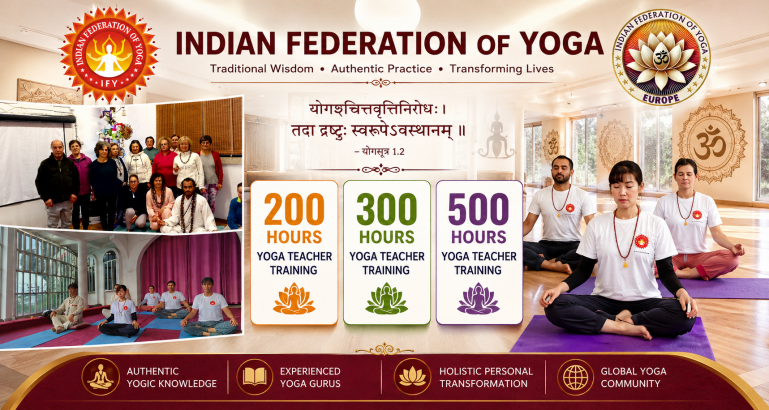
Students can choose from foundational and advanced teacher-training programs, including 200-hour, 300-hour and 500-hour options, subject to the current batch schedule. Training may be available in online, offline and intensive formats depending on the program.
Yoga Teacher Training in India: Overview & Course Options
Professional yoga teacher training (YTT) programs in India bridge traditional yogic heritage with modern instructional standards. Recognized training bodies like the Indian Federation of Yoga (IFY) provide structured certifications for aspirants looking to build credible careers in yoga instruction.
What is Yoga Teacher Training?
Yoga Teacher Training is an intensive professional certification curriculum designed to transition practitioners from personal studentship to safe, knowledgeable, and certified instructors. It covers not just physical postures, but anatomy, breathing mechanics, teaching methodology, philosophy, and practical classroom management.
Who is it For?
- Aspiring Instructors: Individuals looking to launch a professional career teaching yoga locally, nationally, or internationally.
- Dedicated Practitioners: Intermediate or advanced students wanting to deepen their personal practice (sadhana) and understanding of yogic philosophy.
- Fitness & Wellness Professionals: Gym trainers, physiotherapists, and alternative therapists seeking to add accredited yoga credentials to their skill set.
What is Included in the Curriculum?
A standard professional training program encompasses core modules:
- Asanas (Postures): Comprehensive alignment, breakdown, and adjustment techniques for classical Hatha and Vinyasa styles.
- Pranayama & Kriyas: Masterclass study of breath control, vital energy flow, and traditional cleansing techniques.
- Yogic Philosophy: In-depth study of texts such as Patanjali’s Yoga Sutras and the Eight Limbs of Yoga.
- Anatomy & Physiology: Functional physical anatomy and subtle energy systems (chakras, nadis, koshas).
- Teaching Methodology & Practicum: Safe sequencing, voice modulation, class observation, and live student-teaching feedback sessions.
Course Options & Formats
Programs are structured into clear chronological tiers and formats depending on your career goals:
| Course Level / Program | Duration / Format | Primary Focus |
| Foundation Course in Yoga | Flexible / Monthly (Online & Offline) | Introductory wellness, basic posture alignment, and lifestyle awareness. |
| Certificate Course in Yoga (200 Hours) | Intensive Residential or Modular | The international gold standard foundational training for professional instructors. |
| Yoga Instructor Course (YIC) | 6 Months (Online & Offline options) | Mid-length course geared toward community instruction and fitness integration. |
| Advanced Asana / 300-Hour & 500-Hour TTC | Multi-week immersive | Advanced sequencing, mastery over complex postures, and deeper therapeutic philosophy. |
| Diploma / PG Diploma in Yoga | 12 Months (Online & Offline) | Comprehensive professional specialization in yoga education and advanced theory. |
| Specialized Certifications | Short-term modules | Targeted tracks including Yoga Protocol Instructor, Kids Yoga, and Meditation coaching. |
Are you looking for details on a specific duration, or would you like help choosing between an intensive residential program and flexible local batches?
Course at a Glance
| Feature | Details |
|---|---|
| Course | Yoga Teacher Training Course |
| Levels | 200 / 300 / 500 Hours |
| Mode | Online / Offline |
| Subjects | Asana, Pranayama, Meditation, Philosophy, Anatomy & Teaching |
| Eligibility | Depends on program |
| Certification | IFY Certificate upon successful completion |
| Location | Delhi / India / applicable batch location |
| Language | English / Hindi |
Yoga Teacher Training Programs: 200, 300, and 500-Hour Comparison
Choosing the right certification level depends on your current experience, practice depth, and professional goals. At the Indian Federation of Yoga, our tiered training programs are structured to guide students from foundational instruction to advanced yoga teaching.
Here is a side-by-side comparison to help you determine which program aligns with your goals:
| Program Level | Best For | Core Focus & Outcomes |
|---|---|---|
| 200-Hour YTTC | Beginners & aspiring yoga teachers | Establishes a strong foundation in alignment, basic anatomy, classical asana practice, and introductory teaching methodology to support the development of yoga teaching skills. |
| 300-Hour YTTC | Existing yoga teachers & advanced practitioners | Deepens personal practice (sadhana) and develops advanced sequencing, subtle body concepts, therapeutic applications, and deeper study of yoga philosophy. |
| 500-Hour YTTC | Students seeking extended, comprehensive training | Combines foundational and advanced areas of study into an extended training pathway designed for comprehensive yoga education and professional teaching development. |
Explore the dedicated program pages for detailed curriculum, batch schedules, eligibility requirements, and fee information.
200-Hour Yoga Teacher Training in India
The 200-hour Yoga Teacher Training Course (YTTC) is the gold standard foundational certification for anyone looking to step onto the path of professional instruction or deepen their personal practice. Designed with a rigorous yet accessible structure, this program bridges traditional yogic wisdom with modern teaching methodologies.
Who It Is For
This program is ideal for dedicated practitioners looking to refine their personal sadhana, fitness enthusiasts wanting to transition into formal instruction, and aspiring teachers seeking an internationally recognized credential to launch their teaching career.
Duration & Hours
Conducted through flexible schedules (including intensive residential or modular weekend formats), the curriculum comprises a comprehensive 200 hours of dedicated study, practice, and practical classroom training.
Core Subjects
The curriculum covers essential foundational pillars:
- Asana & Alignment: Safe breakdown, posture adjustments, and sequencing of classical Hatha and Vinyasa styles.
- Pranayama & Meditation: Breath control techniques, subtle energy channels (nadis), and concentration practices.
- Anatomy & Physiology: Functional understanding of physical structures, joint safety, and physiological benefits of yoga.
- Yogic Philosophy: Study of classical texts, including Patanjali’s Yoga Sutras and the ethical principles of yoga.
Practical Teaching & Assessment
Students participate in supervised teaching practice (practicum), peer teaching sessions, and constructive feedback loops to build classroom confidence. Assessment is based on continuous participation, practical teaching evaluations, and a foundational theoretical review.
Certification & Career Options
Upon successful completion, graduates receive the official Indian Federation of Yoga (IFY) Certificate. This certification opens doors to diverse career paths, including teaching at yoga studios, fitness centers, wellness retreats, corporate wellness programs, or launching independent private classes locally and online.
.png)
“दूरेण ह्यवरं कर्म बुद्धियोगाद्धनञ्जय। बुद्धौ शरणमन्विच्छ कृपणाः फलहेतवः॥
योगिनामपि सर्वेषां मद्गतेनान्तरात्मना। श्रद्धावान्भजते यो मां स मे युक्ततमो मतः॥”
"Bhagavad Gita”
What You Will Learn
Our comprehensive 200-hour curriculum covers all essential pillars of classical yoga, physical science, and modern instructional methodology. Here is a detailed breakdown of what you will master during the training:
1. Asana Practice
- Hatha Yoga: Traditional postures focused on stability, breath synchronization, and stamina.
- Surya Namaskar: Dynamic Sun Salutation variations with precise alignment cues.
- Alignment: Detailed structural breakdown of foundational and intermediate postures.
- Modifications: Using props and alternative adjustments to accommodate varying body types and limitations.
- Sequencing: Building balanced, safe, and logical class flows for different student levels.
2. Pranayama
- Breathing Practices: Foundation and intermediate pranayama techniques (such as Nadi Shodhana, Kapalabhati, and Bhramari).
- Breath Awareness: Cultivating deep connection between inhalation, retention, exhalation, and vital energy (prana).
- Safe Teaching Techniques: Step-by-step guidance on how to teach breathing exercises safely to beginners.
3. Meditation
- Meditation Techniques: Traditional and accessible mental focus practices.
- Concentration: Developing single-pointed attention (dharana).
- Mindfulness: Cultivating present-moment awareness on and off the mat.
- Relaxation: Guiding deep systemic relaxation and Yoga Nidra.
4. Yoga Philosophy
- Patanjali Yoga Sutras: Core philosophical roots and psychological frameworks of classical yoga.
- Bhagavad Gita: Essential teachings on duty, action, and mental equanimity.
- Eight Limbs of Yoga: Practical application of Ashtanga yoga principles in daily life.
- Yamas and Niyamas: Ethical standards and personal observances.
- Yogic Lifestyle: Integrating holistic wellness habits, discipline, and ethics into modern living.
5. Anatomy & Physiology
- Musculoskeletal System: Understanding bones, joints, major muscle groups, and connective tissue.
- Movement and Alignment: Biomechanics of safe joint movement and injury prevention.
- Basic Anatomy for Yoga Teachers: Practical application of anatomical knowledge to yoga asanas.
- Safe Practice: Recognizing physical limits and protecting vulnerable areas like the spine, knees, and shoulders.
6. Teaching Methodology
- Class Planning: Structuring a complete, well-rounded 60-to-90-minute class.
- Demonstration: Effective visual modeling and mirror-teaching techniques.
- Verbal Instructions: Clear, concise, and inspiring cueing.
- Corrections: Hands-on and verbal adjustments delivered safely and respectfully.
- Modifications: Tailoring postures on-the-fly for mixed-level classes.
- Student Management: Cultivating an inclusive, safe, and encouraging classroom environment.
- Practical Teaching: Regular peer teaching sessions, live teaching practice, and constructive feedback.
Eligibility for Yoga Teacher Training
Eligibility depends on the specific program and certification level you wish to pursue:
- Foundational 200-Hour Program: Suitable for dedicated beginners, regular practitioners, and fitness enthusiasts with a strong passion for yoga and an interest in developing professional teaching skills. No prior teaching experience is required.
- Advanced Programs (300-Hour & 500-Hour YTTC): Generally require prior completion of a foundational 200-hour yoga teacher training certification (or equivalent recognized experience) along with an established personal practice.
Applicants should also possess physical readiness for active daily practice and a sincere commitment to studying yogic philosophy and teaching methodology.
Yoga Teacher Training Course Fees
Transparent financial planning is essential when selecting a professional yoga certification program. Course fees vary depending on the depth of instruction, certification tier, duration, and whether the format is conducted online or through on-campus practical training in Delhi.
The fee structure across our primary professional teacher training levels is outlined below:
| Program | Duration / Hours | Fee Structure |
|---|---|---|
| 200 Hour YTTC | 200 Hours | Rs. 25,000 – Rs. 35,000 |
| 300 Hour YTTC | 300 Hours | Rs. 45,000 – Rs. 60,000 |
| 500 Hour YTTC | 500 Hours | Rs. 75,000 – Rs. 95,000 |
Note: Fees may vary depending on batch, location and learning mode. Contact us for the current fee structure.Flexible installment options and early-registration concessions are available for qualifying students. Fees include comprehensive study manuals, practical training sessions, and final evaluation certification upon successful completion. Contact our Mukherjee Nagar admissions office directly to inquire about current seasonal scholarship opportunities or specialized modular packages
Course Duration & Learning Options
To accommodate diverse schedules—whether you are a working professional, a full-time student, or seeking an immersive learning retreat—our professional yoga teacher training programs are offered through flexible, structured formats:
- Intensive Format: An immersive 4-week fast-track program designed for students seeking concentrated daily instruction, deep daily sadhana, and accelerated professional certification.
- Part-Time / Weekend Format: Flexible weekday and weekend batches spanning 3 to 6 months, allowing local students and working professionals to balance training with their careers and daily routines.
- Online Format: Live interactive online sessions providing structured theory, guided alignment study, and virtual feedback for remote learners.
- Offline Format: In-person, hands-on training conducted directly at our Mukherjee Nagar center in Delhi, ensuring direct instructor contact, physical alignment adjustments, and interactive group practice.
Fees may vary depending on batch, location and learning mode. Contact us for the current fee structure.
Online Yoga Teacher Training
For students unable to attend regular on-campus sessions in Delhi, our structured distance program offers a flexible alternative without compromising educational standards.
- Live Classes: Scheduled interactive online sessions connecting you directly with senior instructors for real-time guidance.
- Theory: Comprehensive digital modules covering yoga philosophy, functional anatomy, and the historical foundations of practice.
- Practical Demonstrations: High-definition video breakdowns of posture alignments, breathing techniques, and teaching methodologies.
- Recorded Resources: Access to a complete library of recorded lectures, alignment labs, and guided practice sessions for continuous revision.
- Assignments: Regular practical and written submissions designed to reinforce key concepts and monitor your progress.
- Assessment: Structured evaluations, including peer-teaching reviews and virtual practical examinations.
- Certificate: Official certification awarded upon successful completion of all curriculum and evaluation requirements.
- Support: Ongoing technical and academic mentoring throughout your training period.
Explore the complete curriculum, batch schedules, and technical requirements on our dedicated Online Yoga Teacher Training Course page.
Offline Yoga Teacher Training in India
For students who thrive in a structured, immersive environment, our offline yoga teacher training offers direct, face-to-face instruction at our dedicated training hub. In-person learning allows for precise physical adjustments, deeper community engagement, and a focused space away from digital distractions.
- Face-to-Face Instruction: Direct guidance from senior mentors who monitor your posture, alignment, and progression in real time.
- Daily Practice: Immersive daily asana, pranayama, and meditation routines designed to rapidly build personal discipline and physical stamina.
- Instructor Feedback: Immediate, personalized corrections and verbal feedback to ensure safe mechanics and proper technique.
- Practical Teaching: Regular live teaching opportunities within group settings to build real-world classroom confidence and public cueing skills.
- Group Classes: Collaborative learning alongside peers, fostering shared growth, peer teaching practice, and lasting professional networks.
- Assessment: Comprehensive practical and theoretical evaluations administered directly by faculty members.
- Location: Hosted at our primary center in Mukherjee Nagar, Delhi, featuring convenient local transit access and dedicated studio infrastructure.
Who Should Join Yoga Teacher Training?
Our professional training programs are designed to accommodate a diverse spectrum of practitioners, ranging from committed beginners to established wellness professionals. You should consider joining if you fall into any of the following categories:
- Beginners Interested in Becoming Yoga Teachers: Individuals ready to transform their personal passion into a formal, certified career in yoga instruction.
- Experienced Yoga Practitioners: Dedicated students looking to deepen their personal practice (sadhana), understand subtle body mechanics, and master classical philosophy.
- Fitness Professionals: Gym trainers, personal coaches, and sports instructors seeking to integrate accredited yoga instruction into their existing skill sets.
- Wellness Professionals: Alternative therapists, physiotherapists, and holistic health practitioners wanting to incorporate therapeutic movement and breathwork into client care.
- Existing Yoga Instructors: Teachers looking to upgrade their credentials from foundational levels to advanced 300-hour or 500-hour certifications.
- People Interested in Teaching Privately: Aspiring educators aiming to build an independent one-on-one coaching practice or specialized boutique workshops.
- People Interested in Studio/Group Classes: Future instructors looking to lead confident, structured classes in community centers, fitness clubs, or dedicated yoga studios.
- Students Seeking Structured Yoga Education: Anyone looking for a rigorous, disciplined, and comprehensive academic study of yogic history, anatomy, and methodology.
Career Opportunities After Yoga Teacher Training
Upon successful completion of your certification, a wide array of professional avenues opens up. Depending on your qualifications, experience, and applicable requirements, graduates may pursue opportunities such as:
- Yoga Instructor: Lead general and specialized classes in fitness centers, health clubs, and community spaces.
- Yoga Studio Teacher: Join established yoga studios as a regular instructor for group classes and specialized workshops.
- Private Yoga Instructor: Build an independent practice offering tailored one-on-one sessions for individual clients or small groups.
- Corporate Yoga Instructor: Partner with businesses and corporate offices to lead workplace wellness, stress-relief, and desk-yoga sessions.
- School Yoga Instructor: Introduce mindfulness, breathwork, and foundational movement to educational institutions and student groups.
- Wellness Center Instructor: Integrate yoga instruction into holistic health clinics, rehabilitation centers, and spa resorts.
- Retreat Instructor: Collaborate with national and international wellness retreats for immersive multi-day programs.
- Online Yoga Teacher: Launch virtual classes, digital membership platforms, or remote coaching programs for global audiences.
- Yoga Workshop Facilitator: Design and lead targeted community workshops focusing on specific topics like meditation, alignment, or pranayama.
Certification & Credentialing
Upon successful completion of all curriculum requirements, practical teaching evaluations, and attendance criteria, graduates are awarded the official Indian Federation of Yoga (IFY) Certificate.
This credential validates your rigorous study of asana alignment, anatomy, philosophy, and instructional methodology, officially marking your readiness to step into professional teaching roles locally, nationally, or online.
Why Choose Indian Federation of Yoga?
When selecting an institute for your professional yoga education, transparency, structured methodology, and experienced instruction are critical. Students choose the Indian Federation of Yoga (IFY) for clear, practical reasons grounded in our academic framework and training delivery:
- Comprehensive Curriculum Integration: Programs strictly balance classical traditions (such as Hatha Yoga, Patanjali Yoga Sutras, and Pranayama) with modern functional requirements like applied anatomy and teaching methodology.
- Experienced Faculty Support: Training is led by qualified, senior practitioners who provide individualized physical adjustments, constructive feedback, and direct mentoring.
- Flexible Learning Formats: Structured batch options—spanning intensive 4-week tracks, weekend part-time schedules, and live online formats—allow students to learn without disrupting professional or personal responsibilities.
- Transparent Standards: Clear evaluation protocols, structured practical teaching (practicum) evaluations, and standardized criteria ensure you graduate with authentic classroom confidence.
- Accessible Delhi Hub: Centrally located in Mukherjee Nagar, Delhi, our dedicated training space offers an immersive physical learning environment with easy transit connectivity across North Delhi.
- Recognized Certification: Official credentials awarded directly by the Indian Federation of Yoga upon successful completion validate your training for professional teaching paths locally, nationally, and online.
Frequently Asked Questions
What is a Yoga Teacher Training Course?
A Yoga Teacher Training Course (YTTC) is a structured, comprehensive educational program designed to equip practitioners with the technical knowledge, philosophical understanding, and pedagogical skills required to safely and effectively teach yoga to others.
Who can join a Yoga Teacher Training Course?
The courses are open to anyone with a sincere interest in yoga, ranging from dedicated practitioners looking to deepen their personal practice to aspiring professionals wanting to build a career in wellness instruction.
What is a 200-hour Yoga Teacher Training Course?
The 200-hour YTTC is the internationally recognized foundational certification standard. It provides balanced core instruction covering asana alignment, anatomy, pranayama, meditation, philosophy, and teaching methodology.
What is the difference between 200, 300 and 500 hours?
The 200-hour program is a foundational entry-level certification. The 300-hour program is an advanced course intended for 200-hour graduates seeking deeper specialization. A 500-hour program combines foundational and advanced training into a comprehensive mastery track.
How much does Yoga Teacher Training cost in India?
Course fees vary depending on the depth of the curriculum, certification tier, and learning format. Foundational 200-hour programs generally range between Rs. 25,000 and Rs. 35,000, while advanced tiers scale accordingly. Fees may vary depending on batch, location and learning mode. Contact us for the current fee structure.
How long does yoga teacher training take?
Durations vary by format. Intensive tracks can be completed over 4 weeks, whereas part-time, weekend, or modular formats typically span 3 to 6 months.
Can beginners join Yoga Teacher Training?
Yes. Dedicated beginners and regular practitioners with a strong passion for learning are fully eligible for foundational 200-hour training programs, as no prior teaching experience is required.
Is Yoga Teacher Training available online?
Yes. Live interactive online formats are available, featuring virtual classes, digital theory modules, recorded resources, and remote faculty support.
Is offline Yoga Teacher Training available?
Yes. In-person, face-to-face training is conducted directly at our dedicated center in Mukherjee Nagar, Delhi, offering immersive daily practice and hands-on instructor feedback.
What subjects are taught in Yoga Teacher Training?
The curriculum covers classical Hatha yoga, Surya Namaskar, posture alignment, pranayama, meditation, Patanjali Yoga Sutras, Bhagavad Gita, musculoskeletal anatomy, and practical teaching methodology.
Will I receive a certificate after completing the course?
Yes. Graduates who successfully fulfill all attendance, practical, and theoretical evaluation criteria receive the official Indian Federation of Yoga (IFY) Certificate.
Can I teach yoga after completing the course?
Yes. Upon certification, graduates can pursue diverse professional opportunities, including teaching in studios, fitness clubs, corporate wellness programs, schools, or establishing private practices.
Where is the Yoga Teacher Training conducted?
Offline classes are hosted at our primary training institute located in Mukherjee Nagar, Delhi, alongside accessible live-streamed options for online participants.
What is the eligibility for advanced YTTC programs?
Advanced programs (such as 300-hour or 500-hour YTTC) generally require prior completion of a certified 200-hour foundational course and a steady personal practice.
How do I apply for admission?
You can apply by contacting our admissions office directly via phone or email, or by visiting our Mukherjee Nagar center to discuss available batch schedules, learning modes, and enrollment steps.

Your email address will not be published. Required fields are marked *
Send Your Query